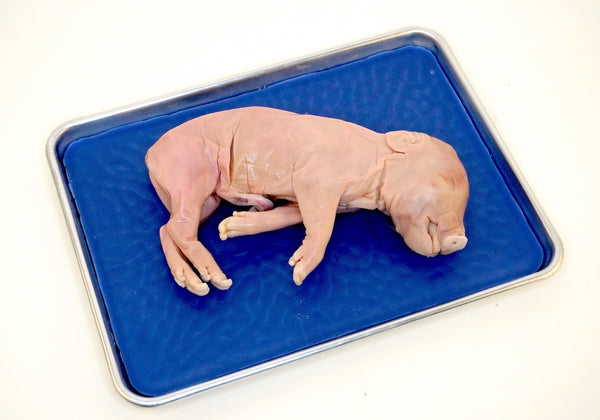
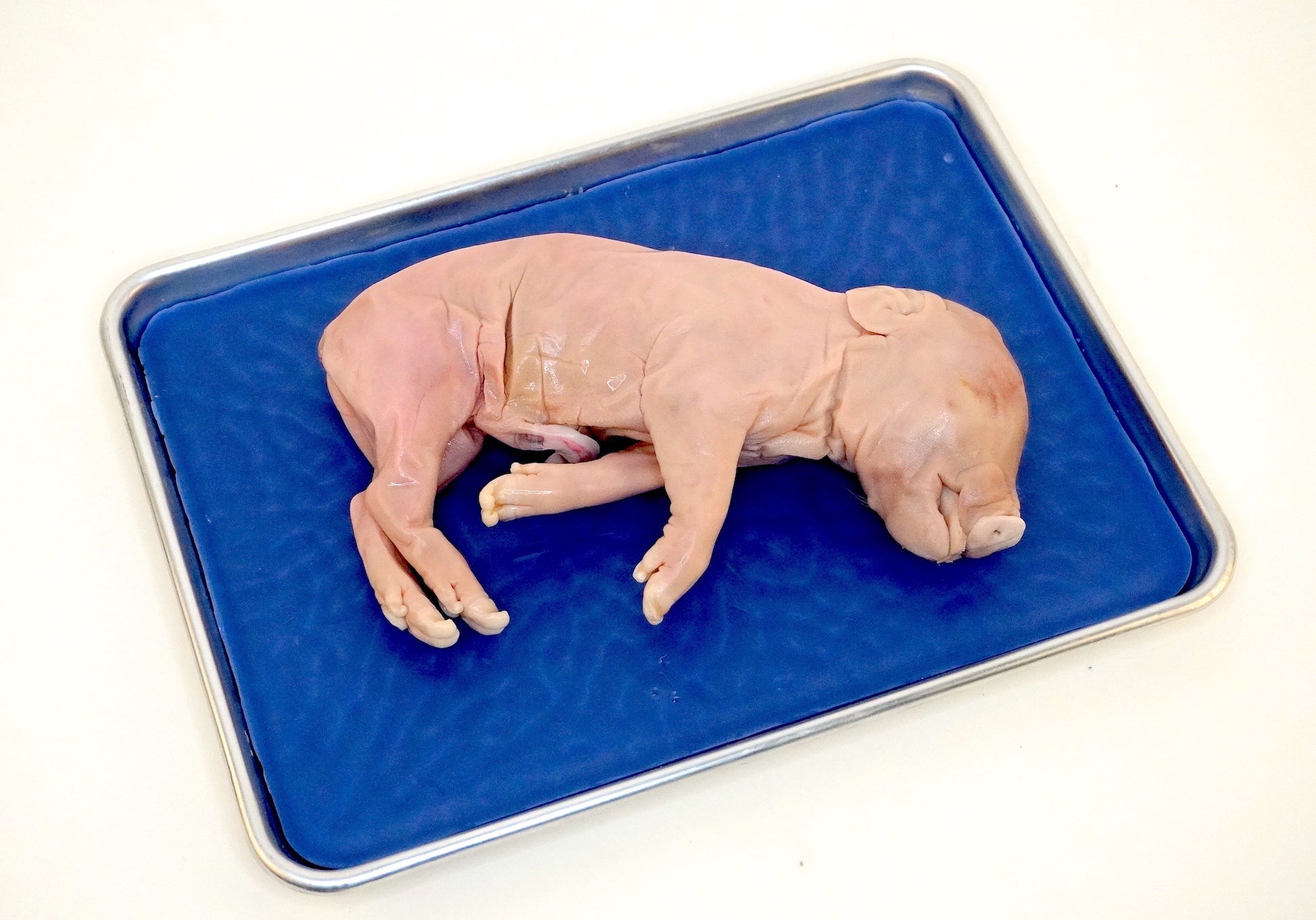
This double-injected fetal pig dissection specimen is an excellent model for exploring mammalian anatomy and understanding organ system organization in higher vertebrates. Commonly used inmiddle school, high school, and introductory college biology labs, fetal pigs closely resemble human anatomy, making them ideal for comparative anatomy studies. This specimen is specially prepared with red dye injected into the arteries and blue dye injected into the veins to clearly highlight the circulatory system, allowing students to easily trace blood flow and identify major vessels during hands-on classroom dissection.
This preserved fetal pig specimen for dissection supports instruction in vertebrate biology and comparative anatomy, making it a cornerstone specimen for anatomy labs, life science courses, and homeschool science programs. The double injection enhances visibility of blood vessels, helping students better understand circulation and organ relationships during dissection.
Did You Know? Fetal pigs are commonly used in anatomy studies because their internal organs are arranged very similarly to those of humans, allowing students to make meaningful comparisons between animal and human biology.
Store specimens in an area of room temperature away from direct sunlight. Do not freeze or expose to high temperatures (more than 85ºF). Specimens will last up to 12 months when left unopened. After opening, the specimen should be placed in a zip-top bag and may be kept for up to one month.
Discounts available for purchases of 10 or more fetal pig specimens!
Best paired with our large dissection tray (shown) and dissection tool kit.